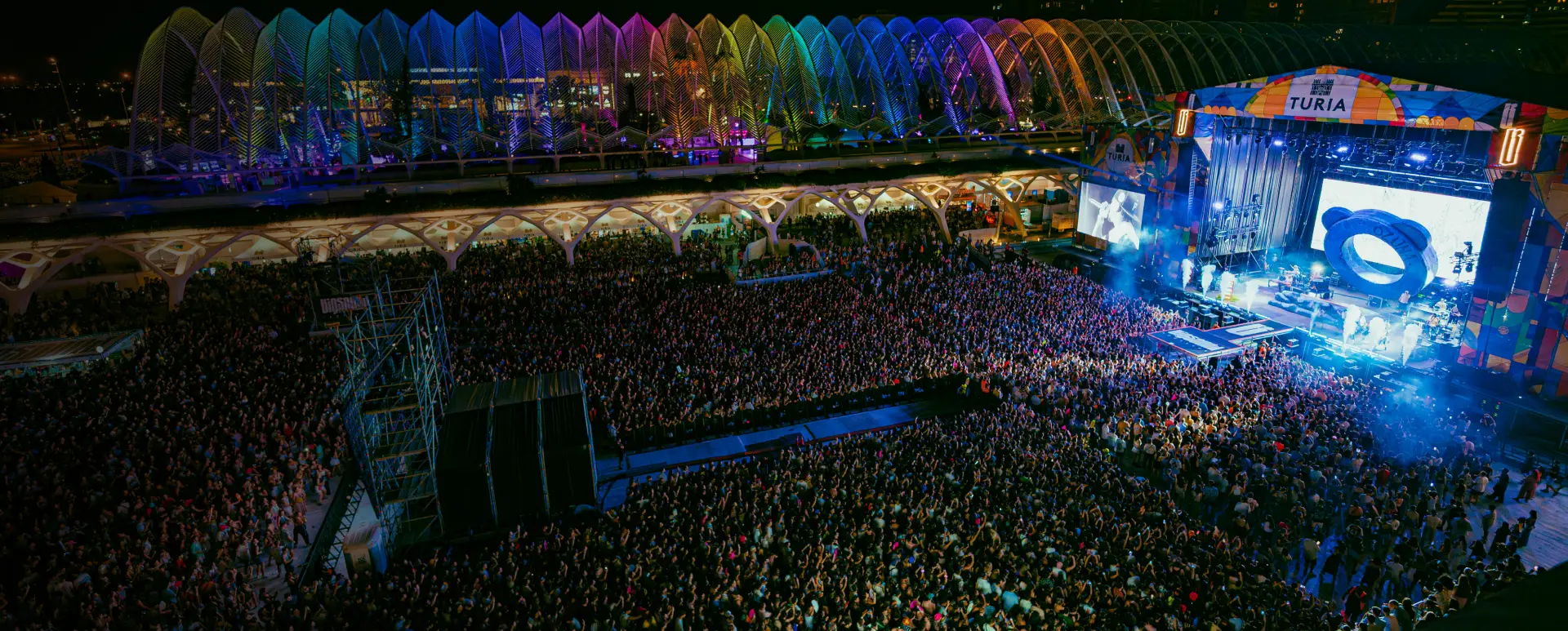
Close your eyes and picture this: you have just wrapped the best edition of your festival ever. Record attendance, great reviews, the aftermovie is already racking up views. Everything went well. But there is a question you probably cannot answer: of all the people who came this year, how many were also there last year? And of those who came two editions ago, how many have quietly stopped showing up? Festival attendee retention starts right there: knowing who comes back, who leaves, and why.
Most promoters pour nearly all their marketing budget into acquiring new attendees. Social media, ad campaigns, lineup announcements, media partnerships. And it makes sense: you need to fill the venue. But there is a piece of data that few take into account. According to Bain & Company, acquiring a new customer costs 5 to 7 times more than retaining one who already knows you. In the world of festivals, that means something very concrete: the person who already attended your festival and had a great experience is, by far, your best sales opportunity for the next edition. And you are probably not giving them the attention they deserve.
Acquisition vs. retention: the imbalance nobody questions
Think about how you distribute your marketing budget. Most of it goes to attracting new people: Instagram ads, artist announcement campaigns, press, influencers. It is visible, it generates buzz, it is what the whole industry does. And it works. Up to a point.
What almost nobody does is invest deliberately in the people who already came. I am not talking about sending them an email when the lineup drops. I am talking about building a relationship between editions that makes coming back the natural choice, not something they have to rediscover every year.
The problem is that attendee retention at a festival is not as flashy as a launch campaign. It does not generate headlines. It does not have a viral moment on social media. But the numbers tell a different story: returning attendees buy earlier, spend more on upgrades and merchandise, and bring friends. They are the silent engine that sustains the economics of any recurring event.
If you devote 90% of your effort to acquisition and 10% to retention, you are leaving the most profitable part of your business on the table.
What is the attendee repeat rate and why you should be measuring it
The attendee repeat rate is probably the most important metric a festival promoter can know. And also the least measured.
It is a simple concept: of all attendees at your current edition, what percentage also attended a previous one? If you sold 20,000 tickets this year and 6,000 of those people were also there last year, your repeat rate is 30%.
How to calculate it:
Repeat rate = (returning attendees / total attendees in current edition) x 100
The average rate at European festivals sits between 25% and 35%, according to industry data. Festivals with especially strong communities — like Tomorrowland, which manages over 200,000 pre-registrations for 400,000 tickets — exceed that percentage considerably.
But the point is not to compare yourself to Tomorrowland. The point is to know your number. Because if you do not measure it, you cannot improve it. And because behind that number lie marketing decisions that change everything.
A festival with a 20% repeat rate has a retention problem that it is probably masking with acquisition budget. A festival with a 40% rate has a solid foundation to build faster presales, more aggressive early bird pricing, and more efficient communication.
The first step toward building fan loyalty at your event is as simple as measuring who comes back. And most promoters do not do it because their data from each edition lives in separate silos: a spreadsheet here, a ticketing export there, a Mailchimp list that was half-updated. If you need to dig deeper into how to connect that data, our guide on what is an event CRM explains the concept from scratch.
The 5 audience segments every festival has (even if it cannot see them)
When you start cross-referencing data between editions, you discover something that changes how you communicate: not all your attendees are the same. And treating them as if they were is the most expensive mistake you can make in retention.
Any festival with more than two editions has, at minimum, these five segments:
First-timers (newbies)
They discovered your festival this year. They have no history with you, no specific expectations based on past experience. They are the most expensive to acquire and the easiest to lose. Their experience at this first edition determines whether they will come back or whether your festival will be “that one I went to once.”
What they need: an experience that exceeds their expectations and, after the event, for you not to disappear from their radar.
Returners (2-3 editions)
They have already chosen you more than once. That is not coincidence. Something about your festival connected with them enough to come back. They are in the most delicate phase: no longer new, but not yet unconditional. A weak year, a lineup that does not convince them, or simply being forgotten can make them not return.
What they need: to feel recognized. To know that you know it is not their first time. To have a reason for the third or fourth edition to be even better than the previous ones.
Loyal fans (4+ editions)
Your most valuable asset. These attendees do not come for the lineup. They come for the festival itself: the experience, the community, the ritual. They buy before anyone else, spend more, and most importantly, bring new people. They are your best ambassadors and you are probably not treating them as such.
What they need: recognition, exclusivity, and the feeling that they are part of something bigger than an annual event.
Lapsed attendees (came but did not return)
The most painful and most actionable segment at the same time. These are people who chose you once, who experienced your festival, but have not come back. They are not angry at you. They probably did not even make a conscious decision not to return. It just happened: life, other plans, a tight budget, or they simply forgot tickets were on sale.
What they need: a reminder of what they experienced and a concrete reason to come back.
High-value attendees (VIP, merch, upgrades)
Regardless of how many editions they have attended, there is a segment that spends significantly more than average. They buy VIP, purchase merchandise, do upgrades, book premium experiences. Their economic value per person can be 3 or 4 times that of the average attendee.
What they need: premium options worthy of what they are willing to pay, and the feeling that their extra investment gives them something others do not get.
The difference between treating these five groups as one mass and communicating with each specifically is the difference between a festival that depends on the lineup every year and a festival that builds a stable base of recurring revenue.
Attendee retention strategies by timing: when to do what
Festival attendee retention is not a campaign. It is a continuous process that starts the day your festival ends and does not stop until the next one begins. Most promoters only communicate when they have something to sell (tickets, lineup, schedules). Those who truly build loyalty communicate throughout the entire cycle.
Immediate post-event (24-72 hours)
The first hours after your festival are the moment of highest emotional connection. Your attendee has just lived an intense experience. They are at the emotional peak. What you do in these hours defines whether that feeling becomes a lasting bond or fades into the noise of everyday life.
What to do:
- Send a genuine thank-you email. Not a generic automated message, but something that reflects you know they were there.
- Share exclusive content that only attendees receive: a festival playlist, a short backstage video, an aerial photo of the packed venue.
- Launch a brief survey: what was the best part? What would you improve? Keep it short. 3-5 questions. People respond when the experience is fresh.
Primavera Sound does this especially well. Within days of the festival, attendees receive communications that reinforce the brand connection and gather valuable feedback.
Nostalgia window (2-4 weeks)
After the emotional peak comes nostalgia. This is when your attendees start talking about the festival in the past tense: “how great it was,” “can’t wait for next year.” It is the perfect moment to feed that nostalgia with content that keeps it alive.
What to do:
- Release the aftermovie and make it an event in itself. Make your attendees anticipate it.
- Share photo galleries organized by stage or day. If you can tag or segment, even better.
- Publish highlight moments on social media with hashtags the community already uses.
- If you ran a survey, share some results: “87% of you said Stage X was the best moment.” That creates a sense of belonging.
Pre-sale for the next edition (3-6 months later)
This is where retention becomes revenue. If you have kept the relationship alive, the pre-sale is not a cold email. It is a natural continuation of the conversation.
What to do:
- Offer early access to attendees from the previous edition. Not to your entire email list. Only to those who were there.
- Create a special price for returning attendees. It does not need to be a big discount. A 10-15% reduction or simply purchase priority is enough.
- Communicate first to your loyal fans (4+ editions) before returners, and to returners before the general public. Create layers of exclusivity.
Tomorrowland takes this to the extreme with its pre-registration system. Over 200,000 people register to have a chance at buying one of the 400,000 tickets. They have turned ticket buying into an event in itself. You do not need that level of scale, but the principle is the same: make those who already chose you feel like a priority.
Lineup announcement (variable timing)
The lineup remains the moment of greatest media impact for any festival. But how you communicate it can be very different if you have data about your audience.
What to do:
- Announce to your loyal community a few hours before the general public. That window of exclusivity creates an enormous sense of belonging.
- If you have musical preference data (from surveys, shared playlists, previous editions), personalize the message: “We know you loved [artist/genre]. This year we have booked [similar artist].”
- Use the announcement as an opportunity to reactivate lapsed attendees: “You haven’t been in two years. This lineup is going to bring you back.”
Exclusive early bird
Early bird pricing is the most powerful retention tool if you use it as a reward for loyalty rather than a mass discount.
What to do:
- Reserve the first early bird tier for attendees from previous editions. Not for everyone.
- Frame it as a privilege, not a promotion: “Come back before anyone else” instead of “20% off.”
- Limit units to create real (not artificial) urgency.
Loyalty programs for festivals: what works and what does not
Does your festival need a formal loyalty program? It depends. But the answer is more nuanced than it seems.
What does NOT work
Complex points programs do not fit festivals. An attendee who buys one ticket per year does not accumulate points meaningfully. The “collect points and redeem for prizes” mechanic works in retail and hospitality, where purchase frequency is high. For annual events, it is frustrating.
Programs that require a dedicated app, a separate registration, or any additional friction also do not work. Your attendee does not want yet another login in their life.
What DOES work
Effective festival loyalty is built on three simple pillars:
1. Access: Let returning attendees buy first. It is the most valued incentive and the cheapest to implement. Coachella does this with its pre-registration system that prioritizes previous buyers. It is not magic, it is logistics with data.
2. Exclusivity: Offer experiences that only loyal attendees can access. It does not have to be expensive. It could be a meet and greet with an emerging artist, access to a secret stage, a reserved after-party, or simply limited-edition merchandise that can only be purchased by returners.
3. Recognition: Make your loyal fans feel seen. Tomorrowland does this masterfully with its “People of Tomorrow” concept: you are not an attendee, you are part of a community with its own name. Sonar achieves something similar with its niche community where attendees identify with the intersection of electronic music, digital art, and technology.
The simplest loyalty program you can implement tomorrow: a list of attendees from previous editions with early access and a personalized email that says “we know you were there. Before we announce it to the rest, this is for you.”
Everything you have read so far sounds great in theory. But it has a prerequisite that most promoters do not meet: knowing who comes to your events.
You cannot offer early access to returners if you do not know who returns. You cannot reactivate lapsed attendees if you do not know who stopped coming. You cannot calculate your repeat rate if data from each edition lives in a different spreadsheet.
Festival attendee retention does not start with an email campaign. It starts with the infrastructure that allows you to know who your audience is.
What you need at minimum:
- Buyer data from your last 2-3 editions in the same place
- The ability to cross-reference that data by email to identify who returns
- A communication channel where you can speak to each segment differently
If today your ticketing data is scattered across three spreadsheets and you use Mailchimp to send the same email to everyone, the first step is not to buy any tool. It is to ask yourself: do I want to keep treating every edition as if starting from scratch, or do I want to build on what I already have?
If the answer is the latter, you need to connect that data somehow. An event CRM does exactly that: it connects your ticketing data across editions, automatically identifies who returns, who spends more, and who stopped coming, and allows you to communicate with each group differently without needing a large team.
Case studies: how the best festivals do it
You do not need to be a 100,000-person festival to apply attendee retention strategies. But looking at how the best do it helps you understand the principles.
Tomorrowland: community as product
Tomorrowland does not sell tickets. It sells belonging. Its “People of Tomorrow” concept turns the attendee into a member of a community with its own identity. Over 200,000 people pre-register every year to have the chance to purchase one of the 400,000 tickets.
What you can learn: community identity does not require scale. It requires intention. Give a name to your loyal community. Make them feel they are part of something bigger than a transaction.
Primavera Sound: constant communication
Primavera Sound has expanded its brand to multiple cities (Barcelona, Madrid, Los Angeles, Sao Paulo) while maintaining a core community that identifies with the festival’s values. Their communication between editions is constant: cultural content, playlists, articles, collaborations.
What you can learn: do not disappear between editions. Your festival is not a three-day event. It is a brand that lives all year round. Communicate with your audience even when you have nothing to sell.
Coachella: premium experience as retention
Coachella has built a system of tiered VIP levels where each tier offers increasingly exclusive experiences. It is not just about being “closer to the stage.” It is access to areas with differentiated gastronomy, premium rest zones, exclusive content, and personalized service.
What you can learn: not all your attendees want the same thing. Offering well-designed premium options not only increases average ticket value but creates a loyalty ladder where attendees aspire to level up each year.
Sonar: niche loyalty
Sonar does not try to be for everyone. Its positioning at the intersection of electronic music, digital art, and technology attracts a very specific and very loyal attendee profile. Its repeat rate is consistently high because the audience that goes to Sonar can hardly find that experience anywhere else.
What you can learn: the clearer you are about what makes your festival unique, the easier it will be for those who fit to come back. Retention starts with the value proposition, not with the discount.
The 7 most common mistakes in festival attendee retention
After observing how dozens of festival promoters work, these are the errors that repeat most frequently.
1. Treating all attendees the same. The mass “tickets are on sale” email is the norm. It is convenient, but inefficient. Sending the same message to the fan who has been to five editions and the person who signed up for your newsletter yesterday is wasting the opportunity.
2. Disappearing between editions. If your audience only hears from you when you have something to sell, the relationship is purely transactional. And in a transactional relationship, price and lineup rule. There is no loyalty.
3. Not measuring the repeat rate. If you do not know how many attendees return, you cannot know if your retention efforts work. It is like driving without a speedometer.
4. Obsessing over acquisition and forgetting retention. Acquisition is more visible and more spectacular. Retention is quieter and more profitable. The ideal balance depends on your festival’s maturity, but if you dedicate less than 20% of your marketing effort to retention, there is an imbalance.
5. Confusing discounts with loyalty. A discount does not create loyalty. It attracts deal hunters. Loyalty is built on recognition, access, and experience, not on price.
6. Not collecting data between editions. If the only information you have about your attendees is a ticketing export, you miss the opportunity to enrich profiles with interactions: surveys, email clicks, social media participation, attendance at satellite events.
7. Starting too big. You do not need a complex loyalty program, a dedicated app, or a 10-person CRM team. You need to know who came, contact them in a relevant way, and give them a reason to return. Start there.
From casual attendees to fans who return: concrete steps
If you have read this far, you are probably already thinking about what you could do differently for your next edition. You do not need to revolutionize everything at once. Here are the steps in order of impact and ease of implementation:
Step 1: Export your ticketing data from the last 2-3 editions. Cross-reference the emails. Calculate your repeat rate. With that number alone, you will have more information than 90% of promoters in the industry.
Step 2: Identify your segments: who came for the first time? Who returned? Who stopped coming? You do not need sophisticated tools for this. A well-structured spreadsheet is enough for the first exercise.
Step 3: The next time you put tickets on sale, do not send the same email to everyone. Send a different message to those who already came. That alone will produce a visible change in response.
Step 4: After your next festival, do not wait three months to communicate with your attendees. Send something within the first 72 hours. Something that is not about selling, but about connecting.
Step 5: When you have the system running, consider automating it. Tools like Nevent connect your ticketing data across editions, segment automatically, and let you create different communication flows for each group without needing a large team. But the tool is step 5, not step 1.
What truly changes festival attendee retention is not a campaign, a tool, or a discount. It is the decision to stop looking at your audience as capacity numbers and start seeing them as people who already chose you and deserve a reason to come back.
The next time you finish an edition of your festival, before archiving the ticketing spreadsheet, ask yourself one question: of all the people who were there, how many are you going to give a reason to return?
Frequently Asked Questions
What is the attendee repeat rate at a festival?
The attendee repeat rate is the percentage of people who attend more than one edition of the same festival. It is calculated by dividing the number of returning attendees by the total attendees of the current edition. It is the most direct indicator of audience loyalty and the long-term health of your event.
What is a good repeat rate for a festival?
The average repeat rate for European festivals is between 25% and 35%. Festivals with strong communities like Tomorrowland or Sonar exceed 40%. If your rate is below 20%, there is significant room for improvement in your retention strategy.
How can I find out how many attendees return to my festival?
You need to cross-reference ticket purchase data between editions. If your ticketing platform does not do this automatically, you can export buyer lists from each edition and match emails. An event CRM automates this process and gives you the data in real time.
How much does it cost to acquire a new attendee vs. retaining an existing one?
According to Bain & Company data, acquiring a new customer costs 5 to 7 times more than retaining an existing one. In the events industry, this translates to lower advertising costs, higher presale conversion rates, and higher average spending from returning attendees.
Does it make sense to create a loyalty program for my festival?
Yes, but not necessarily a complex points program. The most effective approach for festivals is to offer early ticket access, special pricing for returning attendees, exclusive content, and reserved experiences for your most loyal community. Start simple and scale based on your audience response.
What should I do about attendees who came but haven't returned?
They are your most actionable segment. Identify them by cross-referencing data between editions, analyze when they stopped coming, and communicate with them specifically: remind them of what they experienced, ask what would bring them back, and offer a personalized incentive.
When should I start retention actions after a festival?
The first 24-72 hours post-event are critical. That is when the experience is freshest and the emotional connection is strongest. Send a thank you, share exclusive content, and open a communication channel. Then maintain contact in the following weeks with photos, aftermovie and surveys.