Complete Guide: CRM for Festivals and Concerts in Spain 2026
Complete guide on CRM for festivals and concerts in Spain 2026. Discover what makes an event promoter CRM different, how it integrates with your ticketing platform and what metrics to expect. For promoters who want to truly know their audience.
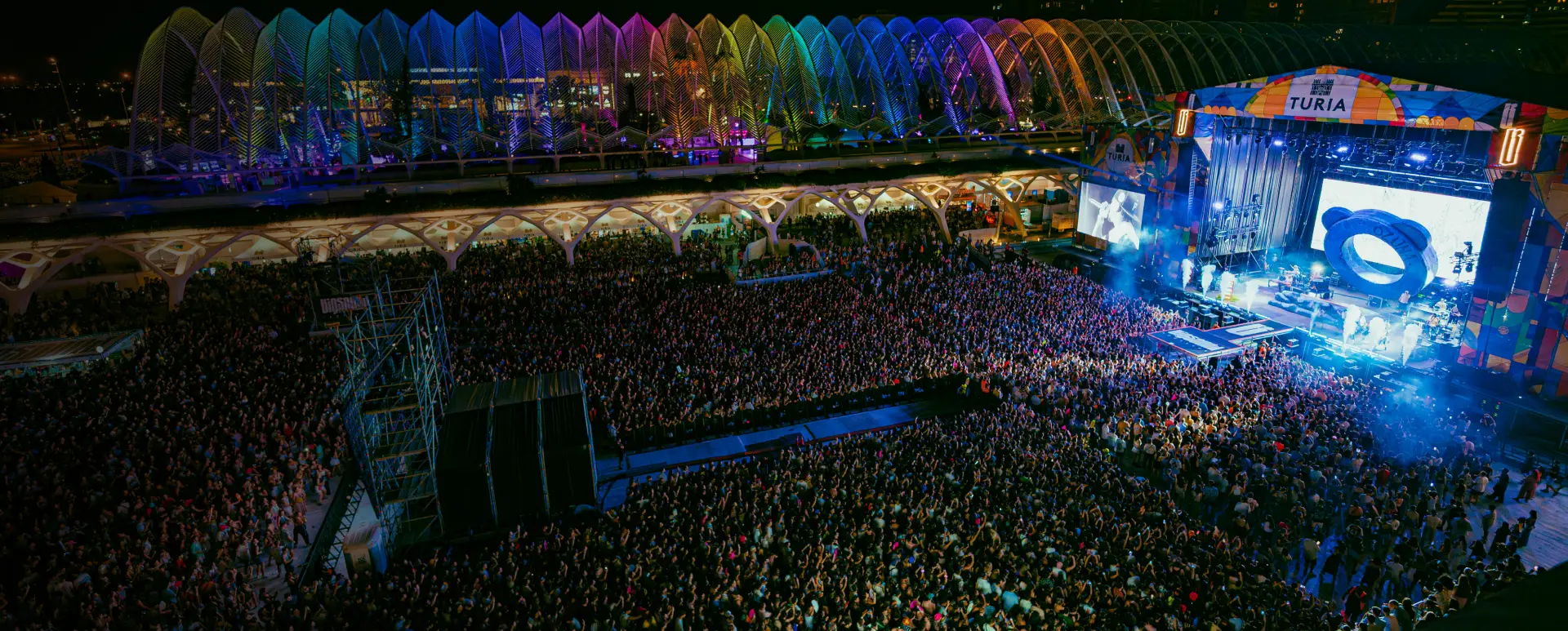
Imagine your festival has just closed its best edition. 25,000 people over three days. The team exhausted, but satisfied. October arrives, the post-season hangover, and someone in the office asks: “how many of these 25,000 will come back next year?”.
Silence.
The honest answer, for most promoters in Spain, is: “we don’t know”. Data is scattered between the ticketing platform, last year’s spreadsheet and the email tool the comms team uses. No one has a complete view of who comes, who returns, who is the attendee who has come five editions in a row and never missed one.
That’s exactly where a festival and concert CRM comes in.
What is an event CRM and why is it different from a generic one
A CRM — in its most basic definition — is a tool to manage relationships with your contacts. But a CRM designed for event promoters has nothing in common with what an insurance company or an advertising agency uses.
The fundamental difference lies in the attendee lifecycle.
In most businesses, a customer has a continuous relationship with the brand: buys every month, renews, interacts regularly. In the live events sector, the relationship is radically different: the attendee buys a ticket in December, lives the experience in July, and the next touchpoint is the announcement of next year’s lineup. Months of silence between interactions.
A generic CRM — Salesforce, HubSpot, even Mailchimp — isn’t designed to manage this intermittence. Its data models, automation flows and metrics are built for businesses with continuous relationships.
An attendee’s profile is built over several editions, not over several purchases in the same month
Relevant segmentation isn’t by “last purchase date” but by “number of editions attended”, “usual ticket type” or “declared music preferences”
The optimal communication moment isn’t “when the customer is in the purchase funnel” but when there’s an event on the horizon and the attendee hasn’t yet decided whether to go
Native integration with ticketing platforms (DICE, Eventim, XCEED, Vivaticket) isn’t an add-on: it’s the core of the system
This nuance has enormous practical consequences in how an attendee database is built, how it’s segmented and how communication happens with it.
The reality of Spanish promoters in 2026: scattered data, missed opportunities
The live entertainment sector in Spain has gone through an accelerated transformation in recent years. Primavera Sound, Sónar and Mad Cool consolidated Barcelona and Madrid as two of the European capitals of reference for music festivals. The club segment — with Fabrik, Pacha or Amnesia as global references — generates weekly activity that accumulates millions of annual impacts. And the wave of corporate consolidation — Superstruct acquiring Spanish festivals, Fever integrating DICE, CTS Eventim expanding its presence — has professionalized management expectations.
And yet, most mid-sized promoters in Spain manage their attendee relationships in a fragmented way:
Data lives in silos. Each ticketing platform generates its own export. When a festival works with two different ticketing platforms — usual when selling tickets through different channels — attendee data is never cross-referenced. The result: there is no single attendee profile, there are n profiles in n spreadsheets.
Communication is broadcast. The lineup announcement email reaches the entire base at the same time, with the same message. The attendee who has come for six years in a row receives the exact same text as someone who bought a ticket four years ago and never came back.
Data disappears between editions. When the season ends, accumulated knowledge evaporates. Ticketing exports are stored in a folder no one looks at until the next year. The opportunity to communicate with the attendee while the festival is still fresh in their memory — September, October — is systematically missed.
GDPR is interpreted as a barrier, not an asset. Many promoters avoid building their own database because “they don’t want to get into privacy trouble”. The result is they structurally depend on social media audiences — rented, not owned — to reach their public.
This situation has a cost that doesn’t appear in any P&L but is perfectly calculable: the cost of not knowing who comes to your events.
What a specialized live entertainment CRM solves
The value proposition of a music promoter CRM articulates across four practical dimensions:
Unified attendee profile
The first step — and the most transformative — is to stop having data and start having people.
An attendee profile in an event CRM is not just an email address and a name. It’s the complete history of the relationship: editions attended, ticket type usually bought (full pass, day, VIP), purchase behavior (early bird or last-minute, solo or in group), preferred communication channels and, if properly captured, declared preferences for genres, artists or experiences.
With that profile, a communication campaign goes from being an email to the entire base to being a differentiated conversation with real segments.
Audience segmentation with event logic
Festival audience management requires a segmentation logic that generic CRMs don’t have by default. Some examples of segments with direct impact on results:
High-loyalty returners: attendees who have come three or more consecutive editions. This segment has repurchase rates exceeding 70% when activated with early ticket access
Recoverable churners: attendees who came two or more editions but haven’t bought in a year. The cost of recovering them is three to five times lower than acquiring a new attendee
Systematic late buyers: those who always buy in the last weeks. Activating them with specific campaigns can bring their purchase decision forward and reduce treasury uncertainty
Potential referrers: attendees who usually buy tickets in groups. They are the most valuable segment for “bring a friend” campaigns
This segmentation logic doesn’t exist in HubSpot or Klaviyo by default. It has to be built. And building it on ticketing data — not on web behavior — is what makes an event CRM different.
Relevant automation between editions
The biggest gap promoters have isn’t in pre-event communication — they work that — but in the eight or ten months between editions.
During that period, attendees forget. They build new leisure references. And when the lineup returns, they no longer have the same emotional bond with the festival they had in August.
A well-configured CRM for music promoters closes that gap with automatic and relevant communication: the post-event thank-you message when the memory is still vivid, the community content in winter that maintains the bond, the exclusive pre-sale alert before the public lineup announcement.
None of these communications require a marketing team of ten people. They require having taken the time to configure them once.
Retention: the ROI that doesn’t show in the sales report
The festival business is usually analyzed in terms of ticket sales. What isn’t analyzed — because there’s no data — is the difference between an attendee who returns and one who doesn’t.
A festival of 15,000 attendees with a repeat rate of 40% needs to acquire 9,000 new attendees every year to maintain its size. With a rate of 60%, it only needs to acquire 6,000. The difference — 3,000 attendees — equals several hundred thousand euros in acquisition cost, depending on the average ticket price and channels used.
That’s the equation that justifies investing in a festival CRM: not as a marketing cost, but as a structural reduction in acquisition cost.
How the CRM integrates with the ticketing ecosystem
One of the most frequent misunderstandings is thinking the CRM competes with the ticketing platform. It doesn’t. The CRM is the layer that makes the information generated by the ticketing platform actionable.
The correct relationship is: ticketing platform generates the transaction and purchase data → CRM turns that data into profiles, segments and campaigns.
Platforms like DICE, Eventim, XCEED and Vivaticket have different strengths in terms of reach, discovery and purchase experience. None of them is designed to be a marketing automation tool. That’s not their purpose.
A CRM specialized in the live entertainment sector imports data from the ticketing platform — either via direct API or periodic export — and builds on top of it the attendee relationship layer. The promoter doesn’t have to choose between their ticketing platform and their CRM: they use them together.
The concrete flow works like this:
The attendee buys through the ticketing platform
Purchase data syncs with the CRM (name, email, ticket type, date, channel)
The CRM creates or updates the attendee profile
That profile automatically enters the corresponding segments
Post-event and inter-edition communication is executed from the CRM, with the right segments
When the promoter works with multiple ticketing platforms — or with different platforms for different countries or events — the CRM is the only place where the attendee view is unified.
For more detail on how this integration works technically with the main platforms in the market, you can check our ticketing integration guide.
What to look for in a festival CRM: the features that matter
Not all platforms presented as event CRMs offer the same thing. These are the capabilities that make a difference in practice:
Ticketing data ingestion — natively or via API. Without this, the CRM only works with data the team enters manually, which in practice means it doesn’t work.
Per-edition attendance history — the ability to see how many times each attendee has come and to which specific editions. Without this longitudinal view, loyalty-based segmentation is impossible.
Segmentation by purchase behavior — not just “bought yes/no” but when they bought, how they paid, if they repeated, if they referred. This level of granularity is what enables relevant communication.
Automatic communication flows between events — configure once the post-event, community-maintenance and pre-sale sequence, so it runs by itself in each cycle.
Frictionless GDPR compliance — consent management, automatic unsubscribes, permission logs. Not as a brake but as a guarantee that the database is legitimate and solid.
Relationship metrics, not just send metrics — open and click rates are email metrics. The metrics that matter in an event CRM are: repeat rate by segment, average time between first purchase and second, percentage of active attendees out of the total historical base.
The best CRM for concert promoters: specialized vs generic
The most common comparison promoters make is between a specialized CRM and generalist tools like Mailchimp, Klaviyo or HubSpot. The right question isn’t “which is better?” but “what is each one designed for?”.
Mailchimp is excellent for sending newsletters. Its data model is basic — email lists, not attendee profiles — and its ticketing integration capacity is nil except with intermediate solutions.
Klaviyo is a powerful tool for e-commerce. Its purchase-behavior-based automations are sophisticated, but its data model assumes a frequent purchase relationship and isn’t prepared for the long live event cycle.
HubSpot is a complete CRM for companies with B2B sales processes. Its complexity, price and learning curve are sized for sales and marketing teams with dedicated specialists. A team of five people managing a festival doesn’t need — nor can manage — that complexity.
Tools specialized in music promoter CRMs start from a different data model: the attendee as the unit, the event as the context, the edition as the cycle. Everything else is built on that base.
The practical difference: in a generic CRM, building a segment of “attendees who have come three or more consecutive editions and bought day tickets, not full passes” requires a data integration project. In a specialized one, it’s a two-step filter.
If you want to go deeper into this comparison, you can read our analysis of the best event CRMs with sector-specific criteria.
How major festival groups are centralizing their marketing with CRMs
The consolidation of the sector in Spain — and in Europe — isn’t just financial. It’s also operational and data-related.
When a group manages several festivals in different markets, the challenge isn’t to do marketing for each one separately. It’s to build a data infrastructure that allows understanding the attendee across the portfolio’s different events: who attends electronic festivals in Spain but also in Germany, who has affinity with the camping format, who is the high-value attendee who buys passes at three different festivals from the same group.
That level of audience intelligence isn’t achieved with multiple Mailchimp accounts disconnected from each other. It’s achieved with a platform that centralizes data from all events in a unified model.
Mid-sized promoters also benefit from this logic, although at a different scale: the summer festival attendee can be the same one who goes to the same promoter’s indoor venue concerts in winter. Without a CRM that unifies those relationships, the promoter doesn’t know it and can’t act on it.
Festival CRM ROI: metrics and real benchmarks
The question promoters ask most before investing in a CRM is: “how much will I get back?”. It’s the right question, and it has an answer.
The benchmarks observed in the live entertainment sector point to:
Repeat rate. Festivals without an active data strategy retain between 30% and 40% of attendees edition to edition. Those that work with CRM and inter-edition communication usually sit between 55% and 65%. Translated to euros: in a festival of 10,000 attendees with an average ticket price of €120, the difference between retaining 3,500 or 5,500 attendees is €240,000 in revenue that requires no acquisition cost.
Advance sale speed. Pre-sale campaigns targeted at attendees from previous editions — especially the high-loyalty returner segment — have conversion rates that multiply by three or four those of general campaigns. Selling more tickets before announcing the lineup reduces financial pressure and improves predictability.
Reduction in acquisition cost. Each attendee who returns is one you don’t have to acquire again. In markets with high competition for attention — which is the festival market in Spain in 2026 — reducing dependence on paid advertising is a structural advantage.
Revenue from upgrades. A CRM that knows each attendee’s history can activate specific communications to offer ticket upgrades (from day to full pass, from full pass to VIP) to the segment with the highest propensity to buy them. Promoters who work this lever report between 8% and 15% additional revenue on the returner base.
When do you start seeing results? The first edition after implementing the CRM already shows differences in advance sale speed. The effects on the repeat rate consolidate in the second and third edition.
Conclusion: what separates festivals that know their audience from those that don’t
The live events market in Spain in 2026 is more competitive and more professionalized than ever. Corporate consolidation, pressure on margins and calendar saturation have raised the bar for all players.
In that context, knowing your attendees — who they are, how many times they’ve come, what makes them return — is no longer a differential advantage. It’s a necessary condition to operate with efficiency.
The festival CRM is the tool that turns ticketing data into actionable knowledge. It’s not a promise of magic nor a substitute for a good lineup and a good experience. It’s the layer that makes the work you’re already doing generate an asset that grows with each edition.
The question isn’t whether you need a CRM. The question is how many more editions you can afford to be without one.
If you want to see how this would apply to your festival or promoter specifically, the Nevent team works with promoters of all sizes to set it up from day one.
What exactly is a festival CRM and how does it differ from a normal CRM?
A festival CRM is a platform specifically designed to manage the relationship with live event attendees. The fundamental difference from a generic CRM is in the data model: instead of managing customers with frequent purchases, it manages attendees with a long cycle between interactions (months between editions). It includes native integration with ticketing platforms, segmentation by attendance history and communication flows adapted to the event calendar. Tools like Nevent are built with this logic from the start.
How does the CRM integrate with my current ticketing platform (DICE, Eventim, XCEED, Vivaticket)?
Integration can be directly via API — when the ticketing platform offers it — or through periodic data import. The result is the same: data from each sale arrives in the CRM, is associated with the attendee's profile (or creates a new one if it's their first purchase) and automatically updates segments. Integration with the ticketing platform doesn't require changing how you sell tickets, just adding the relationship layer on top.
How long does it take to have the CRM operational for a festival?
With a specialized solution, the basic setup time — connection to the ticketing platform, importing history, first segments — is days, not weeks. Setting up communication flows between editions takes a bit more time, but these are configurations done once and replicated each cycle.
What data do I need to have to start using an event CRM?
The minimum viable data is an export from your ticketing platform with email, name and purchase date. From there, you already have the foundations to build profiles and segments. If you have history from several editions, even better: data richness grows over time. You don't need to have a perfect database to start.
Is GDPR a problem for building a festival attendee database?
GDPR is a reality to work with, not a blocker. Any attendee who has bought a ticket through your sales system has established a contractual relationship with you. With proper consent management — which a specialized CRM facilitates — you have a legal basis to communicate with them.
Does a CRM make sense for a festival with fewer than 5,000 attendees?
Yes, if the festival repeats with some regularity and the promoter wants to build a loyal attendee community. A festival of 3,000 attendees that retains 60% has a base of 1,800 people with high probability of returning. Building an active relationship with that group is perfectly viable with accessible tools.
Does an event CRM replace my other marketing tools?
Not necessarily. The event CRM manages the relationship and attendee data. Communication can be executed from the CRM itself or integrated with tools you already use. What it does replace is the spreadsheet, manually exported lists and the lack of segmentation.
When do you start seeing results with a festival CRM?
The first edition after implementing the CRM already shows differences in advance sale speed. The effects on the repeat rate consolidate in the second and third edition. Industry benchmarks show that festivals with an active CRM and inter-edition communication set their repeat rate between 55% and 65%, compared to 30-40% for those who don't work their data. In a festival of 10,000 attendees with an average ticket price of €120, the difference can be over €240,000 in revenue that requires no acquisition cost.